
What he wanted
How George Pepperdine intended his college to relate to the church

This is the first part of a new series on George Pepperdine’s intentions for his college’s church relationship and the way these intentions have been construed across the history of the institution.
Sometimes, people at Pepperdine University appeal to what the founder George Pepperdine would have thought of the modern university: “[he] would be pleased at how his University has grown and matured,”1 “[he] would be proud of our growth,”2 and so on.
As a rhetorical move, this can be effective, and it’s mostly harmless when the supposed cause of the founder’s hypothetical pride or pleasure is something unobjectionable like the school’s success. I’ve made these kinds of appeals myself, hopefully with sufficient historical evidence to support such assertions.3
Sometimes, though, appeals to the founder have been made about more contentious matters. Occasionally, these assertions have even been at odds with each other as various interpreters of the university’s history make conflicting claims about the founder’s wishes. If there’s one such dispute that has generated the most disagreement over the years, it’s the long-running debate about the founder’s intentions for the institution’s relationship with the church.
This series will investigate how George Pepperdine wanted his college to relate to the church and how his intentions have been understood, represented, and debated ever since the founding.
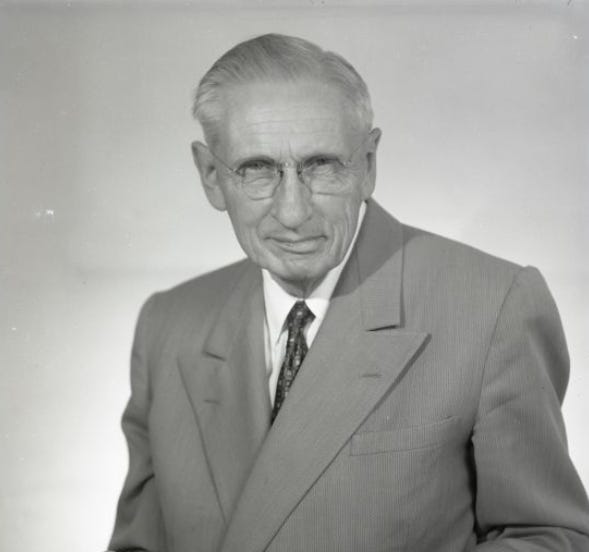
When George Pepperdine founded his college in 1937, he wrote as if he had a relatively clear idea of how he hoped the college would relate to the church. On two questions, his intentions were stated very explicitly: First, the college would not seek donations from the church, and second, the faculty and board of trustees would be made up entirely of Christians with the goal of exerting Christian influence on the students.
It may seem peculiar that the founder of a Christian college would be opposed to taking donations from churches, but this was a matter of great significance to Mr. Pepperdine, who was raised in a wing of the Churches of Christ suspicious of church-funded colleges. Many of Mr. Pepperdine’s contemporaries identified him as a “Sommerite,” an adherent to the teachings of Daniel Sommer, who taught that, because the New Testament provides no examples of church-funded schools, such institutions are unauthorized digressions from the biblical model.4
In early discussions of his intentions for the college, Mr. Pepperdine states clearly “that under no circumstances will the church ever be asked for contributions to the college […] to avoid the possibility of any scriptural question ever arising over the establishing of such an institution.”5 The other way he sometimes phrased this condition of his involvement was “that the project be recognized from the beginning as a private institution, not connected with the church in any manner.”6 These two formulas may sound different, but to the founder they were always united. Elsewhere he wrote that the institution “shall be a private enterprise, not connected with any church, and shall not solicit contributions from the churches.”7
It would be easy to get the wrong idea from these quotations, and in fact many have gotten the wrong idea over the succeeding generations, as we will see. But one way to complicate the picture is to contrast the prohibition on church funds with Mr. Pepperdine’s other clearly stated intention: that the college’s faculty and governing board be drawn entirely from the church. The college’s articles of incorporation stated that all members of the board should be “members in good standing of the Church of Christ,” and the founder also stated a requirement “that the board of trustees and faculty be composed of devout Christian men and women, thereby safeguarding and deepening the faith of the students.”8
Responsibility for actually assembling a faculty of devout Christians for the college fell to the first president, Batsell Baxter, who requested that Mr. Pepperdine clarify what exactly he had meant by “devout Christian.” In an extant letter, the founder specifies a whole list of doctrines he took to be orthodox, including “the Deity of Christ, His virgin birth, His miracles and His Atoning blood,” as well as some teachings more distinctive of the Churches of Christ, such as “the New Testament plan of church organization and worship which includes the regular observance of the Lord’s Supper and which excludes instrumental music.”9 President Baxter seems to have been diligent in his adherence to this definition while selecting members of the first faculty, prompting one candidate to write back affirming “the virgin birth, the diety [sic], the miracles of Christ, and the Bibical [sic] account of creation.”10
Either of Mr. Pepperdine’s requirements might be misunderstood on its own: his stated intention that the college “not be connected with any church” might sound like a recipe for an interdenominational or even a secular institution, while his requirement that all members of the faculty and board belong to a church with certain doctrinal commitments and liturgical practices might suggest a more sectarian project. Viewed in conjunction, however, the picture is more nuanced. In short, his intention at the founding was for the college to be operated by members of the church and for its operations to be funded privately rather than with contributions from church treasuries.
These principles played out in interesting ways in the college’s early years. For instance, while president Baxter was punctilious in testing faculty candidates against the founder’s definition, he also seems to have discovered that the Church of Christ was not the only faith tradition that met the stated requirements. Although the vast majority of the first faculty belonged to the founder’s tradition, one professor of French and German belonged to a Mennonite church.11
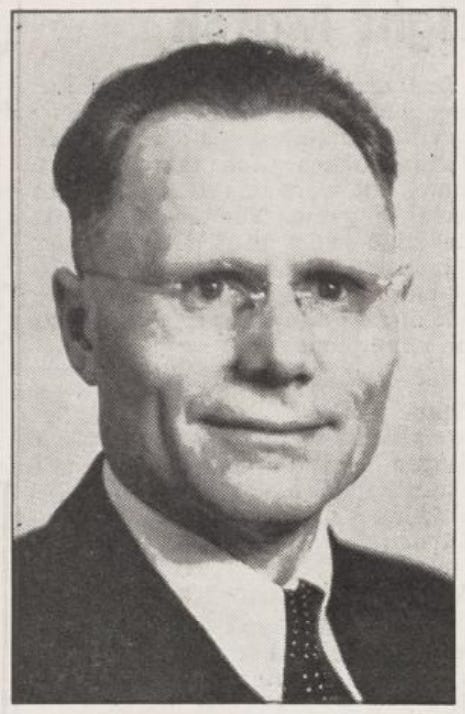
Dederich Navall was a Dutch Mennonite born in what is now Ukraine.12 His presence on the first faculty suggests that Mr. Pepperdine’s understanding of the phrase “members in good standing of the Church of Christ” may have been less a matter of a church’s shared genealogical origin in the Stone–Campbell Movement and more a matter of shared doctrinal commitments. Indeed, viewed through the lens of the hiring criteria, Navall’s Mennonite church probably had quite a lot in common with Mr. Pepperdine’s church of Christ, including a cappella worship and congregational polity. These shared beliefs were the result of a kind of convergent evolution whereby two faith traditions from very different parts of the family tree had developed a striking resemblance, often reaching the same place by different paths. As far as I can tell, it was this similarity that made Navall eligible to join the faculty.13
This overriding concern for beliefs and practices rather than labels or genealogical origins was characteristic of Mr. Pepperdine’s background in the Stone–Campbell Movement, which itself resulted (as the name suggests) from the union of two independent movements with different names but common understanding of essential doctrines. It would be wrong, however, to take Navall’s presence on the first faculty as a sign that Mr. Pepperdine preferred a kumbaya, anything-goes, interdenominational ecumenism as the basis for his college. Far from it! His embrace of Navall was motivated by a different instinct, one that sought to build unity, yes, but on a solid foundation of essential Christian beliefs and church practices.
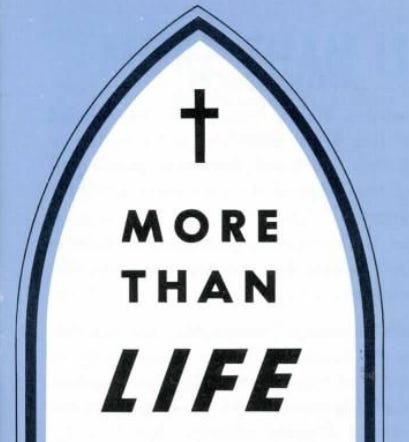
As if to leave no doubt on this matter, Mr. Pepperdine expounded his beliefs on interdenominational cooperation at some length in his tract More Than Life: “To encourage the denominations in their errors and bid them Godspeed in their false teaching by co-operating with them, would make the church of Christ ‘partaker of their evil deeds’ (II John 11). … Unity must be on a scriptural basis, not merely a union of conflicting denominations.”14 Although he granted “there are many good people who are trying to serve God as members of unscriptural denominations,” he was more interested in right belief and practice: “we should oppose their doctrinal errors.”15
Without the proper context, it might seem as though Mr. Pepperdine’s intentions for the college were in tension with each other, motivated by conflicting instincts—to be independent from the church’s funds and also dependent on the church for personnel. But there was a single instinct underlying it all: Mr. Pepperdine’s obedience to scripture as he understood it. His opposition to funding the college from the church treasury was “to avoid the possibility of any scriptural question ever arising,” and his requirement that faculty candidates belong to churches with a “New Testament plan of church organization” was also informed by his reading of the Bible.
From the founding, Mr. Pepperdine intended the college to be scripturally sound and to be staffed with Christians from scripturally sound churches. To him, that meant (among other things) refusing to solicit church funds and insisting on a high degree of alignment between the faculty’s doctrinal commitments and his own. Later interpreters of the founder’s intentions have differed in two ways—some by drawing different conclusions from scripture and others by questioning whether scriptural soundness should be among the institution’s aims at all.
Curtis, Jessica. “47th Annual Pepperdine Associates Dinner Honors Founder George Pepperdine’s Enduring Legacy,” Pepperdine Newsroom: 25 Apr. 2023.
Benton, Andrew. “President’s Message.”
See, for example, The gift of books and Usefulness and the liberal arts.
For further discussion of Mr. Pepperdine’s Sommerism, see my essay Whether Pepperdine be a church. For an example of Sommer’s writing on Christian schools, see “Concerning the Unscripturalness of Establishing Religio-Secular Schools with the Lord’s Money: Chapter III,” Octographic Review 46.38 (22 Sept. 1903): 8. Sommer writes, “It may be safely said that religio-secular schools [i.e., schools that teach the Bible alongside academic subjects] built with the Lord’s money, being unauthorized and unmentioned in the New Testament, are unscriptural….”
George Pepperdine to Hugh Tiner, c. March 1937, George Pepperdine Family Papers, Pepperdine University Special Collections and University Archives (SCUA).
Ibid.
George Pepperdine, “Founder’s Statement,” Bulletin George Pepperdine College, June 1937, SCUA.
George Pepperdine to Hugh Tiner, supra note 5. See also an almost identical statement in “Founder’s statement,” supra note 7. Note, however, that a later source also includes an allowance for non–Church of Christ faculty appointments: “the board of trustees of the College shall have the right, at their discretion, to employ temporary instructors […] who are not of this faith, whenever an emergency may make it necessary to take such instructor temporarily.” See George Pepperdine to Batsell Baxter, 21 July 1937, reproduced in Minutes, Board of Trustees, 15 Sept. 1937, vol. 1, SCUA: 22–23.
George Pepperdine to Batsell Baxter, 21 July 1937, supra note 8.
E. V. Pullias to Batsell Baxter, 20 Apr. 1937, Box 8, Folder 14, Earl V. Pullias papers, SCUA. Note, however, that Pullias, who would serve as the second dean of the college from 1940 to 1957, also expresses in this letter some misgivings about the prospects for academic freedom at an institution with so rigid a set of doctrinal requirements: “I could not cast my lot with an institution that did not safeguard a certain basic, reasonable degree of academic freedom.” Baxter’s response, which to my knowledge has not survived, must have satisfied Pullias as to the college’s stance on academic freedom.
“Twenty-one Teachers on GPC Force,” The Graphic, 27 Oct. 1937: 1.
Sources are inconsistent regarding the spelling of Dr. Navall’s name. I’ve seen Dederich, Dedrich, Dietrich, and Diedrich. He sometimes spelled his surname as Neufeld, and he also published under the pseudonyms Novocampus (a Latin calque of the German Neufeld) and Dirk Gora. His book Russian Dance of Death (1930) was enjoyed by the novelist Willa Cather. See Willa Cather to Dirk Gora, 15 Jan. 1931, Ellery Sedgwick Papers, Massachusetts Historical Society, Boston, MA.
Navall was a cherished member of the faculty. At his retirement in 1954, he received a gold medal for his distinguished service to the college, becoming the first member of the faculty so honored. See “Praise, Awards Greet Navall At Ceremony,” The Graphic, 8 Oct. 1954: 1. It seems possible that Navall was only ever considered eligible for his position because of the founder’s emergency exemption for temporary instructors “not of this faith,” but the length of Navall’s tenure makes this interpretation seem less likely. Cf. supra note 8.
George Pepperdine, More Than Life, 1949 revised edition, Vermont Ave. Church of Christ, George Pepperdine Family Papers, SCUA: 39, 41. A later edition of this tract is available online.
Ibid.: 37.